
OSU HOOP STARS STAND TALL IN 62 YEAR RUN TO GLORY
NBA Celebrates Its 75th Season
By K.J. WHITE
Oregon State's mens basketball program has carved out an impressive niche of achievement and perseverance in the annals of college basketball history. Their most celebrated hoopsters enjoyed an unprecedented run of success in the National Basketball Association from 1947 to 2009. During that time frame, only once did a season commence without at least one former Beaver roaming the hardwood. Unlikely as it may sound, no other college or university can make that claim. Not Kentucky, not Kansas, not Indiana nor even that famed basketball mecca to the south, UCLA.
This parade of talent exiting cozy Corvallis, Oregon began in the 1947-48 season when a razor-thin 6-9 postman by the name of Ephraim “Red” Rocha joined the St. Louis Bombers. A native of Hilo, Hawaii, Rocha was an all-conference performer for Slats Gill's Beavers in 1945,1946, and 1947, helping them reach the NCAA tournament in his senior season when they posted a 28-5 overall record. They lost their first game to eventual finalist Oklahoma 56-54 in the then eight-team tourney. Rocha joined the eight- team Basketball Association of America (the league was renamed in 1949-50) that could only be described as unsettled and looking for a permanent place in the world of professional sports. Franchises shifted or folded from year to year, sometimes before the season was even finished. To cut travel expenses the league actually reduced the number of games from 60 to 48 for the 1947-48 campaign. Baseball had its' deadball era, and the early NBA had its' slow-ball era. It was pre-24-second shot clock and games were often in the 60 and 70 point totals with the action grinding to a halt in the fourth quarters when stalling and fouling (to get the ball back) became commonplace. The game was definitely played below the rim. The dunk shot, while legal, was simply not done in game action, as it was considered showboating and an embarrassment to both teams. Jump shooting was still in its infancy, taking a back seat to the tried and true set shots, both one-hand and two-hand, and the usually reliable and tough to defend hook shot. Today's game is played significantly above the rim and revolves around the dunk, the dunk, and (almost) nothing but the dunk. We have the slam dunk, the reverse dunk, the 360 dunk, the alley-oop dunk, and the “in your face” dunk. And the emphasis is intimidating and/or showing up the opponent. As a result, new terms have been added to the basketball lexicon, such as “trash talking” and “taunting.” Rocha, speaking from his Corvallis home in 2001, reflected on those early NBA days. “Back then we just played the game, you make a basket, you just go about your business. There was no show about it. Today all this stuff players do after a dunk is just not necessary. I think its a better game without the dunk, but hey, times change. We used to dunk in practice or warmups, but never in a game. Dunking in games became more commonplace when Bill Russell came in and really increased later with Wilt Chamberlain. My last year was Russell's first. I picked a good time to get out.” While Rocha marvels at the size, quickness, and strength of today's players, he prefers watching the college game. He continues, “the NBA today, especially in the pivot is a wrestling match. There's no finesse. If you like watching great individual players, then its a great game. But its definitely not for the basketball purist. The growth of the league has been phenomenal, and as one of the, so to speak pioneers, its fun knowing you had something to do with its' development. The money today is mind boggling. My first year, our entire team payroll was $60,000 and that was for 10 guys. The most I ever made in one season was $12,000 I think, which considering the times was still a lot more than your average working guy was making. My strength was defense. I would play against the top scorer from the other team and try to shut him down. One thing about players today and its kind of sad, they don't know about the past, about the way the game has evolved.”
Rocha retired following the 1956-57 season. In nine seasons, he averaged 10.9 points per game, played in the first two all-star games (both held in Boston Garden) and pocketed an NBA championship with the Syracuse Nationals in 1954-55. That was also the first season of the much needed and literally “game saving” 24-second shot clock. Rocha spoke of the bold move. “We knew it wasn't good that the stalling was slowing the game at times to a crawl and something had to be done to keep people coming to the arenas. There was no problem at all adjusting to the shot clock, because when teams weren't holding the ball, and that was only at strategic times of the game, we were shooting within the 24 second time frame anyway.” In the first season of the clock, average team scoring rose 13.6 points per game to 93.1 and within three years all teams were averaging well over 100 points per contest. Ironically Syracuse won its' championship coming from 17 points behind to beat Fort Wayne 92-91. The exciting conclusion would have been almost impossible under the old rules. Interestingly, shooting percentages were incredibly poor throughout the league, hovering in the low 30's. In fact Rocha was considered a “deadeye” in his first year, shooting .314 from the field, good for 7th best in the league, while scoring at a 9th best 12.7 per game. The great Hall of Famer and backcourt star of the Boston Celtics, Bob Cousy, never once shot 40% in 13 NBA seasons, finishing with a career .375 mark.
After his playing days, Rocha moved into the coaching ranks, first with the Detroit Pistons (1958-60) and then 11 seasons with the University of Hawaii. His 1972 team went 24-2, losing to Weber State in the first round of the NCAA playoffs. That appearance earned him the distinction of being the first person to play and coach in both the NBA and NCAA playoffs (Detroit in the 1958-59 season). Rocha, who was inducted into the Oregon Sports Hall of Fame and the OSU Hall of Fame passed in 2010 at his Corvallis home, after a bout with cancer. He was 86.
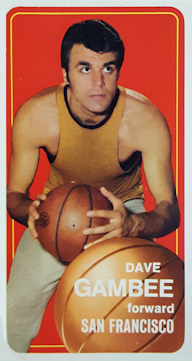
While Rocha was winding down his career, another Gill phenom was etching his name in the OSU basketball archives. Dave Gambee, a Portland native, who attended Corvallis high school was a 6-6, 215 pound whirlwind, who upon completing his three year varsity career, had scored more points and grabbed more rebounds than any player in OSU history. His career scoring average of 18.8 is still 4th highest in school history, while his rebounds per game, 10.6 ranks third. He racked up 30 or more points on five occasions and as a sophomore he once corralled 23 rebounds in one game. He sparked his team to a 20-6 mark in 1957-58. Drafted in the first round (7th overall) by the league champion St. Louis Hawks, Gambee had little idea what the still fledgling pro circuit had to offer. “The league back then was nothing like it is today,” recalled Gambee, speaking from his Portland area home. “There were only eight teams and none west of St. Louis, no television exposure, in fact I had never seen a pro game. But I was 21 and thought what the heck, I'll give it a try.” The “trial” extended 12 years and along the way he logged 793 games, scored 8,302 points, grabbed 3,797 rebounds, collected a NBA title with Philadelphia in 1966-67, and produced four sons (Mike, Greg, Kent, Brad) with wife Joyce. That first year was truly a learning and watching experience as Gambee appeared in only two games after undergoing an appendectomy. Two years later he found himself in Syracuse where his game began to blossom under new coach Alex Hannum. ”Hannum is the coach most responsible for my development as a pro,” he says. “He liked my defensive tactics and gave me the opportunity to become a key member of the club. He was a player's coach, having played in the league just a few years earlier.” Gambee racked up career highs in both in both points (16.7) and rebounds (7.9) per contest. Hannum had been coaching the Wichita club of the National Industrial Basketball League that won the national Amateur Athletic Union (AAU) title in 1960. When he made the move to Syracuse, he brought with him his best player, a 7-3 skyscraper and onetime OSU legend Wade “Swede” Halbrook. Swede was arguably the most celebrated basketball player the state of Oregon ever produced. He led Lincoln High of Portland to the 1951-52 state title, scoring 51 points (of his teams 66) in the final against Central Catholic of Portland. In the same tournament, he pulled down an incredible 34 rebounds against Salem and both marks are records that still stand today. He once scored 71 points in a regular season game and averaged 38.3 points per contest his senior season at Lincoln. Moving on to OSU, Halbrook continued to post prodigious numbers, once snatching 36 rebounds in a game against Idaho and another time attempting 28 free throws versus the very same Vandals, both current school and conference records. In two varsity seasons (this was the era before freshmen eligibility) he averaged 21.1 points and and 12.8 rebounds per game, both second on the all-time school career lists. His junior year (1954-55) the team recorded a 22-8 mark and came within one point of reaching the magical NCAA “final four, losing 57-56 to eventual champion San Francisco in the West regional. That Dons team was led by another junior center who was destined to reshape the game of professional basketball with the Boston Celtics. His name, William Felton Russell. Russell was never better with 29 points and 16 rebounds and his trademark intimidating defense. Swede did manage a more than respectable 18 points and 10 boards and capped the season with his second straight all-conference first team selection. It would also be his last.
The Oscar winning movie PATTON concludes with a parable about Roman conquerors returning home to the cheers and adulation of a tumultuous victory parade. Riding in a magnificent triumphal chariot, “a slave stood behind the conqueror holding a golden crown, and whispering in his ear a warning: that all glory is fleeting.” Behind the fame, adoration, and gaudy statistics, lurked a pattern of behavior that would haunt Halbrook for the rest of his life. He routinely cut classes, missed practices, and in short was a constant headache for the coaching staff. Finally at the end of the 1955 school year Coach Gill issued an edict to his potential All-American, “shape up and abide by team rules and go to class or ship out!” Sadly, Halbrook chose the highway. He spent five seasons with the AAU Wichita team, which in those days was one step below the NBA caliber of play, before making the trek to Syracuse with Hannum. There he found a friendly, if not familiar face in a fellow ex-Beaver. “I never knew Swede when we were at OSU,” says Gambee. “I was a freshman when he was a junior, and then he left unexpectedly prior to his senior year. He was a complicated guy, sort of different from your typical jock. He was a free spirit you might say. He didn't really seem to fit in and always struck me as kind of a lost soul. To sit and talk to him, he was the nicest guy ever, always a gentleman. But he would do bizarre things. He once disappeared and was missing for a week and then came back without any explanation. I know he had a drinking problem, even then. He just sort of drifted off, it was sad and pathetic in many ways. He never really got himself in good physical condition. He should have had a much longer career in the NBA, if he had taken better care of himself. He really wasted a lot of the natural ability he had. I guess it just wasn't that important to him. He was basically a loner. After he left the team, I never saw him again.” Halbrook lasted almost two years in Syracuse as a backup center before being released. He was pro career was finished at age 29. He returned to Portland and a series of odd jobs and continued his lifelong role of being a “character,” before suffering a fatal heart attack while riding a city bus in 1988. He was 55.
In 1960 the NBA finally came to the west coast when Minneapolis relocated to Los Angeles. Two years later the Philadelphia Warriors followed suit and became the San Francisco Warriors. With the lucrative Philadelphia market vacant, Gambee's Syracuse club pulled up stakes and became the Philadelphia 76ers in 1963. By 1966, the core of that Syracuse group, Gambee, Hal Greer, Chet Walker, and Larry Costello, with the addition of of Billy Cunningham, Wally Jones, Lucious Jackson, and Wilt Chamberlain were poised to put an end to Boston's eight-year stranglehold on the league championship. They were more than poised, they were obsessed. Chamberlain, the most prolific scorer and rebounder in the history of the game, had been in the league eight years and desperately wanted to silence his critics with his first championship ring. With the return of Chamberlain's favorite coach Alex Hannum (they had been together in San Francisco in 1964), the 76ers roared to an astonishing league record 68-13 mark, crushing Boston 4-1 and San Francisco 4-2 in the playoffs to secure the title. “That was a very close knit group,” remembers Gambee. “ When Alex came back, things just fell into place. Wilt fit in very nicely. He could be an exceptionally nice person, very congenial. What a player he was, what a force. He really changed with us, concentrating more on rebounding, shot-blocking and assists. Wilt was a talker and never at a loss for words, very opinionated, very intelligent. But I actually got a kick out of the guy. He put people on quite a bit, but I really enjoyed him, although we didn't really socialize away from the court. What an athlete, he was the fastest player on the team from end-line to end-line. Once after practice he challenged everyone to whatever they wanted to bet that he could beat them. And nobody could and he even gave them a head start. He had these huge strides.”
For Gambee, the euphoria of winning the title was short lived. The league was beginning a growth spurt, as the excitement of the Russell-Chamberlain duels had fueled interest and ticket demand. For the 1967-68 season San Diego and Seattle were added to bring the league roster to 12 teams. Gambee was plucked by the Rockets in the expansion draft and had to endure the humbling experience of going from first to worst. “That was an unbelievably dismal season,” he recalls. “We had an incredible amount of injuries that just killed us. Aside from that we really enjoyed being in San Diego. It wasn't that bad really, just part of the job.” Two more teams, Milwaukee and Phoenix, were added the next season and the Gambees (now with four sons) boarded the expansion train once again to Wisconsin. After a trade to San Francisco he decided to retire following the 1969-70 campaign. “It was time, my knees were sore,” he reveals. “You know when it's time. I had gotten involved in the lumber and building products wholesale business during my off-seasons and I enjoyed that, so it was an easy transition. Looking back, the thing that gave me the most satisfaction was the realization that I could hold my own at the highest level. You want to find out how good you are and to know that you can play with the best in the world.” In fact Gambee holds a remarkable record of achievement and good fortune in playing with more Naismith Basketball Hall of Fame members than any player in history. Eighteen. They are in alphabetical order: Al Attles, Walt Bellamy, Dave Bing, Wilt Chamberlain, Bill Cunningham, Dave Debusschere, Hal Greer, Cliff Hagan, Clyde Lovellette, Jerry Lucas, Slater Martin, Ed Macauley, Bob Pettit, Guy Rodgers, Dolph Schayes, Nate Thurman, Jack Twyman, and Chet Walker. “It wasn't easy to play back then in terms of security. Contracts were for one year, there were no agents and not until the end of my time was there even a pension. You might have four people working in the front office. I think it was a better game frankly, all these guaranteed contracts today are hurting the game. Guys are more concerned with protecting their future than just playing the game. We had much more offense when I played, our title team averaged 125 points a game. We always pushed the ball and tried to fast break, even after made baskets. I haven't been to a game in several years. The last one I went to I got a headache from all the noise and distractions. It's like a three ring circus with a little basketball thrown in. Today its all big business. Who can afford to go anymore? Maybe I'm getting old, but I'm glad I played when I did. There was loyalty between players and ownership. I don't see that today.”
By the time Gambee left for pro ball in 1958, Slats Gill had logged 30 years as head coach of the Beavers. He had been a standout player for the OSU in the early twenties, after leading Salem High School to the Oregon state prep title in 1920, where they defeated Lincoln in the final 12-11. Gill was literally an institution in Corvallis (Gill Coliseum is named in his honor) winning 599 games during his tenure while losing only 392. He registered twelve 20-win seasons, advanced to two ‘Final Fours,' founded the widely successful Far West Classic, and is the man most responsible for putting the Beavers on the national basketball map. He turned sixty in 1962 and that fact coupled with recurring health problems had him contemplating retirement. But a lanky sweet-shooting 7-footer from the coastal town of Coos Bay, Oregon would change all of that and provide Gill with a player for the ages and a shot at one ‘last hurrah'.
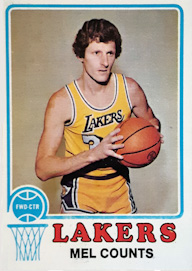
Mel Grant Counts was the kind of player coaches dream about. A big man with mobility, who can shoot, rebound, defend, is coachable, and has a great work ethic. He could shoot the hook shot with either hand, was a master of tip-ins, shot free throws at a 78% clip, and his jump shot with full extension was virtually impossible to block. The “Count of Coos” as some sportswriters dubbed him, averaged 24 points a game in his three varsity years at Marshfield High School, including 28.4 as a senior in 1959-60. Twice he was first team all-state and twice he was first team all-tourney in leading his team to consecutive championship final appearances in the Oregon state prep tournament. Quite simply, at the end of his senior year, “Marvelous Mel” was (and remains to this day) one of the most coveted and accomplished basketball players the state of Oregon has ever produced. His decision to join the Beavers was essentially a foregone conclusion. Speaking from his Gervais, Oregon home he recalled, “They (OSU) started recruiting me when I was a sophomore. The program and the quality of the people on the coaching staff at that time, Jim Anderson, Paul Valenti, and of course Slats, as well as the small town atmosphere, was very attractive to me. I remember watching Dave Gambee play when I was in high school and I marveled at what a complete player he was. I really wanted to be part of that. When it came time to announce, it was a very easy decision. Slats Gill was a great coach in my mind. Always well prepared, a tremendous student of the game who also knew how to motivate individuals in different ways. He had a great basketball mind, a lot like John Wooden, but without the talent Wooden had in California.”
His admiration for Gambee, not withstanding, “Marvelous Mel” proceeded to dismantle all of his records in a three-year varsity stint from 1962-64. He still holds school records for career scoring average (22.2) and rebounding per game (15.4). His 48 point single game output is second highest in school history and he has more 30-plus points games (15) than any other Beaver. All three of his clubs advanced to the NCAA tournament with the 1962-63 team (featuring Heisman Trophy winner Terry Baker in the backcourt) reaching the NCAA “Final Four.” To cap off his amateur career, “Big Mel” won a gold medal with the undefeated 1964 Olympic team in Japan, averaging 6.6 points a game. That team, featuring future US Senator Bill Bradley (and New York Knick) and future coaching legend Larry Brown, shocked the so-called experts with their clean sweep. “That was the most satisfying experience I've had in basketball,” remembers Counts. “The sportswriters had written us off as lacking the talent of earlier teams. But we played as a team and won all nine games. Actually, I wish they would leave it as all amateurs. It's unfortunate that winning at all costs has become so important at the Olympic level.”
Moving on to the pro game, Counts continued his run of good fortune, becoming the first round pick of the six-time defending world champion Boston Celtics. “I'd never thought about professional ball until my junior year in college,” he relates. “Then I thought maybe this is something I can do, I know I was prepared fundamentally. Going to a veteran laden team like the Celtics was actually good for me. I needed to mature as a player, so I watched and learned a lot. When I moved on to another team, I was ready to play.” After two years in Boston, Counts was traded to Los Angeles, but not before he pocketed two championship rings with the Bill Russell led dynasty. “My first year I made $12,000 plus the $3,400 winners share,” he reveals. “The next year I made $12,000 plus $3,600 winners share. I know it sounds cliche, but we really did play for the love of the game. Many guys made more in their off-season jobs than from basketball. Playing with Russell was special. He's the one that started the emphasis on defense and blocked shots. He was smart about it, he would block it to himself or to a teammate. Super quick, great speed and he always came to play.”
In 1967 Counts was traded to Los Angeles where his playing time increased dramatically. A year later the Lakers obtained Wilt Chamberlain in a blockbuster trade and once again Counts was in basketball legends heaven, playing with Jerry West, Elgin Baylor, and “the Big Dipper.” “Wilt was the most dominating player I've ever seen,” reasons Counts. “Incredible strength. People talk about how great Michael Jordan was. Both Chamberlain and Russell could do things that Jordan could never do. I remember once in Phoenix when Wilt blocked 16 shots in the game. He completely sealed off the key. And this was before blocked shots were an official league statistic. Playing with Russell and Wilt moved me to forward much of the time. What a luxury. When my man got by me, he had to meet with them. My game changed from college in that I faced the basket more and became more of a outside shooter as opposed to strictly down low center play. This versatility actually prolonged my career.” Playing with both Russell and Chamberlain also put him in select company as one of only two players ever (along with Willie Naulls) to play along side the two legendary centers. Counts had his best years in Los Angeles, averaging 12.4 and 12.6 points in 1968-69 and 1969-70 respectively and in all reached four NBA finals with the Lakers. “I enjoyed the professional life,” he states. “I liked the travel and the camaraderie with the players. I got to visit a lot of places and meet some great people along the way. I'm quite proud that I lasted as long as I did. I started running a lot and worked on off-season conditioning in my later years and I know it helped.” After two years with the expansion New Orleans Jazz, he closed out his 12-year NBA odyssey following the 1975-76 season. He played those last two campaigns with yet another basketball legend, “Pistol Pete” Maravich. “Pete was such a competitor,” he remembers. “the guy worked so hard growing up to become the player he was, and he still maintained that great work ethic. I tried to be like that in my career. I wouldn't leave practice until I had made 50 free throws in a row. You have to spend the time. I don't follow the pros much these days. I'm not a fan of all this isolation stuff and one on one, it's boring and not team basketball. And some of today's players, I just shake my head, such as missing practices or showing up late for games. That just didn't happen when I played. These players just don't know how good they have it. To be successful you really have to play with passion.” That passion in the NBA accounted for career totals of 874 games, 7,164 points, 5,275 rebounds and six NBA finals. Through his illustrious career, Counts holds the rare distinction of playing alongside 15 Naismith Basketball Hall of Fame players. In alphabetical order they are: Elgin Baylor, Walt Bellamy, Bill Bradley, Wilt Chamberlain, Gail Goodrich, John Havlicek, Connie Hawkins, Tom Heinsohn, Gus Johnson, K.C. Jones, Sam Jones, Pete Maravich, Bill Russell, Charlie Scott, and Jerry West. He settled in the real estate business and along side his wife of 44 years, Nedora, raised children Brent, Brian, Chris, Kelsey, and Merissa (and 28 grandchildren).
With the close of the Counts era in 1964, in which the Beavers registered 71 wins and only 18 losses, Slats Gill stepped down as head coach in favor of longtime assistant Paul Valenti. He stayed only six seasons before walking away from coaching at the end of the 1969-70 campaign. Athletic director Jim Barratt scored a major coup when he lured of the hottest coaches in the country to Corvallis, in 51-year-old Ralph Miller. Miller, coming off an undefeated Big Ten championship with Iowa, was a hard charging, no nonsense veteran of big time college basketball and had already notched 315 lifetime wins. His Hawkeye team averaged 98 points a game and his ‘pressure basketball' style emphasized full court defense and exciting fast break, pass-oriented action that packed the arenas wherever he coached. “Buy your season tickets early,” he proclaimed to the Corvallis Gazette Times upon arriving in Corvallis. “They will be hard to get later on. Fans love offense. Offense means attack. Defense means attack. So we complement one with other and attack every minute of every game. My game requires quickness. We look for that first. But we must also have the man who wants to play defense and who is unselfish. Passing is the chief weapon in my attack. Good passing gets you good shots.”
With this philosophy as his hallmark, Miller proceeded to not only maintain the tradition of Slats Gill, but actually raise it a couple notches in a head-spinning, unprecedented 19-year run as the Beavers head coach. Thru this remarkable rush, there would be eight 20-win seasons, eight NCAA tourney appearances, four Pac-10 crowns, a 26 game winning streak that elevated the team to #1 in the country for eight weeks in 1980-81, and an overall winning percentage of .659. Twice Miller was named national coach of the year. Longtime radio play-by-play announcer Darrell Aune coined the popular catch-phrase “Orange Express” as the team rolled from victory to victory and ruled the Pac-10 from the late seventies thru the eighties. Miller himself, could turnoff fans and players with his gruff exterior and uncompromising principles, and ruffled feathers with his unbridled recruitment of players of African-American descent. He was unhesitant about welcoming black athletes as far back as the early fifties while at Wichita State, during a time in this country when many schools maintained an unspoken quota system or simply refused black athletes to participate in sports. Miller would have none of that and he didn't care who it offended. In tennis legend Arthur Ashe's book A HARD ROAD TO GLORY, this emergence is discussed: “A distinctive ‘black' style of play developed that featured speed, uncommon jumping ability, and innovative passing skills, that while frequently at odds with white coaches' philosophies of the late 1940s, produced results and was extremely exciting to watch.” Miller figured this out early on as did UCLA mastermind John Wooden and they both benefitted enormously from this willingness to give all athletes, regardless of background or race, equal opportunity.
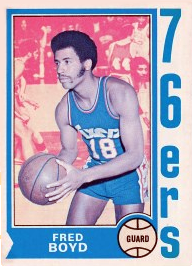
Wooden was in his heyday, having won four straight NCAA titles (and sixth in seven years), when Miller ventured west in 1970. The recruiting battles between the two was predictably lopsided until Wooden retired in 1975. The Wizard of Westwood, a huge talent base, and sunny southern California was no match for the damp and drizzle of Corvallis. When the almost sacred hand of Wooden reached out, high school seniors were awestruck, forcing Miller and lead recruiter Jim Anderson to make do with project players, maybes, and whoever else Wooden may have overlooked or thrown back. One player Miller inherited when when he took over who fit his mold perfectly was a 6-2 junior guard from Bakersfield, California, by the name of Fred Boyd. As a sophomore in Valenti's slow down offense, Boyd managed only 9.7 points a game while shooting .397 from the floor. With Miller's up-tempo attack, Boyd flourished, raising his numbers to18 points as a junior and 19.8 as a senior while shooting well over 50% from the field. Coupled with his outstanding passing and defensive skills, Boyd drew high marks from the pro scouts, emerging, surprisingly so, as the fifth overall pick in the 1972 draft, ahead of such notables of Paul Westphal (USC) and Julius Erving (Massachusetts). Boyd played in all 82 games for the Philadelphia 76ers as a starter, scoring 10.5 points a game and earning league all-rookie team honors. Unfortunately the team stumbled badly out of the gate, losing their first 15 and went on to post the worst record (9-73) in NBA history. After three more seasons with the 76ers and two with New Orleans, Boyd's pro career was over, the victim of injuries, lack of playing time, and a shaken self-confidence. The promise he displayed in his rookie year was never fulfilled and he left the game never having played on a winning team. He eventually returned to Corvallis and was an assistant on Miller's staff during the late eighties.
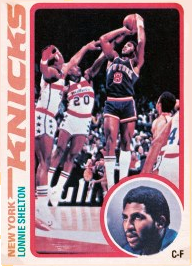
In the early summer of 1973, the USS Wooden was coming off its second straight undefeated (30-0) NCAA championship, they were in the midst of a NCAA-record 88-game winning streak, and All-American Bill Walton was returning for his senior year. But it wasn't enough for the “wizard”. He wanted “all” the so- called “blue chip” players coming out of high school, and it didn't matter a lick where he had to go or who's toes he had to step on to accomplish his mission. He set his sights on the top prospect in the nation, Portland's own 6-10 Richard Washington, who had just led his Benson High School team to its second state championship in three years. His coach, Dick Gray, a former OSU football player gave optimism to the Beaver's cause of landing Washington. But it was not to be. Jim Anderson still bristles at the decision. “It really annoyed me when Wooden came up here and got Washington.” Speaking from his Corvallis home, “ as if he didn't have enough talent in his own backyard. One of the true ‘blue chippers' to come out of Oregon back then and Wooden just had to have him.” Miller, equally miffed threw down the gauntlet and declared, “alright two can play that game.” He and Anderson began recruiting California with a vengeance, signing George Tucker out of Pasadena, Paul Miller from San Luis Obispo, and returning to Bakersfield to ink forwards Don Smith and Lonnie Shelton. Shelton, an immensely talented athlete at 6-8 and 235 pounds, was being pursued by both UCLA and USC for football, but chose OSU because he preferred basketball and also wanted to start as a freshman (freshmen eligibility began in 1972-73). In terms of flat out natural athletic ability, he may be the most gifted player in the history of the program. He was the prototype ‘power' forward, but with incredible quickness, exceptional defensive skills and a deft shooting touch. When he first arrived at OSU, he was a man playing with boys. He was also a spur of the moment kind of guy. When he felt like doing something, he did it and when he didn't feel like it, he didn't do it. He could be both dazzling and exasperating on and off the court. In three years with the Beavers, Shelton averaged 16 points a game, pulled down over eight rebounds a contest and propelled the team to its first top 20 ranking and NCAA tournament appearance under Miller. Once against California, he had 19 points, nine rebounds, nine assists, three steals, and four blocked shots and afterward Miller simply said, “that's Lonnie, a day at the office.” In the waning moments of two wins, he soared through the key and delivered rim-rattling ‘exclamation' slam dunks, to the utter delight of the home crowd. Such acts are commonplace today, but when Shelton played, dunk shots were illegal, and it cost the offending team two points plus a technical foul. During a road trip through Nevada he got married after losing to UNLV. This impulsive behavior, however, caught up with Shelton the summer following his sophomore year and the Beavers were forced to pay dearly for his indiscretions. Coming off an impressive first team all-conference selection, unsavory sports agents were dangling huge contract offers in front of the burly all-star to sign with the old ABA, which unlike the NBA, had no restrictions regarding the pursuit of college underclassmen. He foolishly accepted a plane ride from his home in Bakersfield to St. Louis, where he was wined, dined, and pressured, without benefit of professional advice or legal representation, into signing a contract at 3 AM on June 19, 1975. Admitting he was hoodwinked, Shelton filed suit to have the contract declared invalid and to compel the NCAA to restore his eligibility. The relief was granted in November when U.S. District Court Judge Gus Solomon agreed that Shelton was coerced into signing the contract without legal counsel. Under court order, he was back in uniform when the season commenced, while the NCAA appealed the ruling. He lasted 23 games before the NCAA won its appeal and banished him once and for all. Despite the court order allowing him to play, many within the coaching brethren were critical of Miller for his use of Shelton and as a result the season became a running soap opera. The NCAA was even more harsh, officially forfeiting 15 wins and striking all of Shelton's statistics.
To no one's surprise, Lonnie Jewell Shelton excelled at the professional level, joining the New York Knicks in 1976. He had all the tools, but Miller supplied the fundamentals and an appreciation for basketball as a team game. Early in his rookie season, he scorched New Jersey for 31 points and 21 rebounds, providing east coast fans with a glimpse of his considerable skills. He spent two years as a starter in New York before moving on to Seattle and an NBA championship in 1979. He started for the west squad in the 1982 All-Star game and was named to the all-defensive second team in that same year, and in ten seasons he averaged 12 points a game in both regular season and playoff action. Injuries contributed to his premature retirement following the 1985-86 season at age 30. His health slowly declined and he passed from a heart attack in 2018 at age 62 in Bakersfield. His first son L.J. was an offensive tackle and was drafted in the first round by the NFL Arizona Cardinals in 1999. He had four other sons, Tim, Titus, Marlon and Dion.
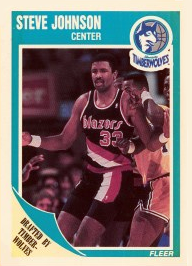
Clarence Stephen Johnson was about as unknown coming out of high school as Lonnie Shelton was known. He played only one year of competitive basketball at San Gorgonia High in San Bernardino California, some 60 miles east of Los Angeles, but came to the Beavers' attention through recruiting ties with former OSU player Leon Jordan (1975-77). Johnson was determined to become an NBA player and saw in OSU, as the only Pac-8 school (Pac-10 began in 1978-79) to offer him a scholarship, a ticket to stardom. By the time he wrapped up his OSU career in 1981, ‘Steve' Johnson would not only fulfill his destiny, but transport Miller's program to the highest echelons of college basketball. At 6-10 and 1/2 inches, Johnson simply over powered most opponents in the key area with a variety of hook shots,dunks, and good old-fashioned layins. He had exceptionally quick feet, a sizable posterior to fend off defenders, and his teammates were masterful at getting the ball to him deep in the key where he established all sorts of field goal accuracy records. He shot an incredible record .746 from the field in 1980-81, after shooting .710 in 1979-80, both better than his free throw percentage. He became the first consensus All-American ‘first team' selection in OSU history in 1981, leading his team to a school record 26 straight games to start the season and their first aforementioned #1 ranking. He was a first round selection (seventh overall pick) by the Kansas City Kings in 1981, where he continued his remarkable field goal accuracy, scoring 12.8 points a game on .613 shooting. He led the league in shooting, (1985-86) with San Antonio (.632) and retired after 10 seasons as the fourth best career shooter (.572) in league history. His best season was actually with the Portland Trail Blazers (1986-87) when he posted a 16.8 scoring mark, led the team in rebounds and made the All-Star team. Surprisingly in 10 seasons he only appeared in 13 playoff games. He made Portland his home, marrying Janice Inman the daughter of former Blazer director of player personnel, Stu Inman. They had four children, one of which, Michael, was a reserve player with the Beavers from 2002-07.
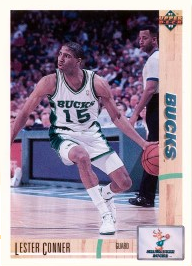
One of the key contributors from that marvelous 1980-81 Beaver team was a silky smooth 6-4 junior swingman by the name of Lester Allen Conner. A native of Oakland, California, Conner was another high school late bloomer and didn't receive much attention from major colleges until he put together huge back-to-back seasons in bay area junior colleges, garnering the California JC Co-Player of the Year honors. Miller, not afraid to give junior college transfers a shot if the need was there and the fit seemed right, found an absolute gem in Conner, and considers him one of the five best all-around players he ever coached. He was that rare breed of player that makes everyone around him better. He was a smaller version of legendary Michigan State and Los Angeles Laker, Magic Johnson, not a good shooter or great leaper or a strong, physical presence on the backboards. All he knew how to do was win. The two years he played in Corvallis (1981-82) the team was a combined 51-7. His senior year he averaged 14.9 points, 5.4 rebounds, 5.1 assists, 3.0 steals per game (all teams highs) and carried the Beavers to the ‘elite eight' in the NCAA tournament, where they were finally stopped by the formidable Patrick Ewing and his Georgetown Hoyas. For these accomplishments, he was selected as PAC-10 player of the year (succeeding Steve Johnson), the first JC transfer to garner the prestigious honor, and was selected in the NBA's first round (14th overall pick) by his hometown Golden State Warriors. The affable Conner parlayed the ultimate team skills of passing and ball-hawking defense into a well-travelled 12-year pro career. He was a full-time starter in only two of those seasons, but maintained his value by doing the little things that coaches love and is often missing at the pro level. In many ways he was the on-court extension of the coach, and following his playing days in 1995 Conner found a home with the Boston Celtics as an assistant to Rick Pitino. After several years in the NBA as an assistant, Conner made a serious run at the vacant OSU head job in 2014. Speaking to the Corvallis Gazette Times, he said, “I've lived in Corvallis . I've played at Gill Coliseum. I've showered in these same showers. And look how I was able to refine myself into a better man. The kids look at that and can relate to that. People can't imagine the excitement I have for this position.” Ultimately, his lack of a college degree or previous head coaching experience may have swayed athletic director Bob De Carolis to current coach Wayne Tinkle. Conner has twin daughters, Simone and Alana and they make their home in the Oakland area.
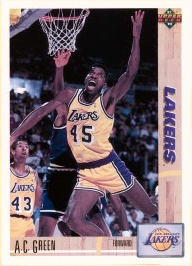
As the “Orange Express' rumbled thru the 80's, Ralph Miller was able to attract some of the so-called ‘blue chip' prospects that had eluded him in earlier years. In the fall of 1981, A.C. Green, after leading his Benson High of Portland to the state championship, ventured south to join the high flying Beavers. Averaging 26 points a game in his senior high school season, the 6-8 forward proved to be an exceptional young man, both on and off the court. As a junior, he led the Beavers to another Pac-10 title, averaging 17.8 points and 8.7 rebounds a game, and earned the conference player of the year award. Turning down lucrative NBA offers, Green, a devout Christian told the Corvallis Gazette Times, “I serve God and I don't want to serve money and be hungry for money. He wants me to get a degree. It's not common for a young man to play basketball and still graduate in four years, but its something I want to do.” During his years as OSU he spoke out against pornography, advocated sexual abstinence before marriage, and fervently embraced the idea of being a role model. “I want young people to hear this message: It is possible to wait. Not everybody is doing it. I'm proud to say I am a virgin, and I don't hide the strength God has given me.” As a senior he posted even better statistics, leading the Pac-10 in scoring (19.1) and rebounding (9.2) per game. He became a first round pick of the World Champion Los Angles Lakers in 1985 where he picked up two world championship rings in eight years, playing along side basketball legends Kareem Abdul Jabbar and Magic Johnson. On November 19, 1986, he began an incredible streak of 1,192 consecutive games played, an NBA record that still stands today (and mostly likely will never be broken), that ended with his retirement in 2001. He founded the A.C. Green Program for Youth and Athlete's for Abstinence and continues to speak out about his personal beliefs. “I want to be a man of integrity,” he proudly states. “One who was not just status-quo about basketball-not the stereotypical athlete. My lifestyle, I believe is totally different and contrary. I play with my heart, the heart of the Lord.” Former NBA teammate Kevin Johnson has said, “A.C. is not an ordinary brother in Christ, he's exceptional. His presence has made a big difference in my approach to basketball and life.” In 1994, Green wrote his autobiography, VICTORY-THE PRINCIPLES OF CHAMPIONSHIP LIVING. He began another chapter in 2002 when he married his wife Veronique.
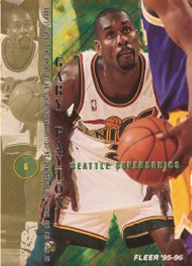
The year after Green's departure, the Beavers suffered through an agonizing 12-15 season, only the third losing campaign in 38 years of head coaching for Ralph Miller. There were whispers from fans and suggestions from members of the media that it might finally be time for the 67-year old ‘curmudgeon' to step aside. Not wanting to exit on a losing note, Miller brushed away the naysayers and announced he would indeed be returning for another year. But with one major change; the addition of a rail-thin 6-2. 171-pound freshman point guard by the name of Gary Payton. Brash, talkative, intensely competitive, the native of Oakland, California wasted no time in establishing himself as the most talented and accomplished player to ever appear in a Oregon State uniform. He started every game as a freshman, scoring 12.5 points and handing out 7.6 assists per game, earning all-conference accolades as both freshman and defensive player of the year. He had uncanny court vision and lightning-quick hands and thrived in Miller's pass-oriented offense and ball-hawking full court pressure defense. He made all conference first team honors as a sophomore and junior, and by improving his outside shooting (he worked extensively with assistant coach Fred Boyd), raised his scoring average to 20.1 points per game and assists to 8.1 per contest. And then prior to his senior year, Ralph Miller did a highly curious and honorable thing. He retired. He had long vowed to step down only when he could leave a healthy program to his loyal assistant of 19 years, Jim Anderson. It was quite a parting gift. Payton responded with a senior season of epic proportions, leading the Pac-10 in scoring (25.7), assists (8.1) and steals (3.0) and was named player of the year. He had single game outputs of 58 and 48 points, was selected as consensus first team All-American, national player of the year by SPORTS ILLUSTRATED magazine and helped the Beavers tie Arizona for the Pac-10 conference championship. He also ended his OSU career as the all-time leader in points, assists, and steals. He was the second player chosen (behind Derrick Coleman) in the 1990 NBA draft by Seattle, where he spent 12 and one half seasons. His professional career was every bit as bountiful as his college days. He played 17 years, appeared in nine All-Star games, was named to the all-defensive team nine times. His durability was remarkable, rivaling A.C. Green. Payton retired in 2007, having missed only 25 games in his NBA career, and in 2013 he reached the pinnacle of all basketball players, induction into the Naismith Basketball Hall of Fame, becoming the first and only Oregon State player to attain this prestigious honor. His son Gary Payton II also joined the Beavers for his junior and senior seasons (2015 and 2016) displaying the same defensive tenacity of his father, earning Pac-12 defensive player of the year twice. His road to the NBA however has not been easy. He has been up and down from the NBA to D & G leagues several times, still looking for a regular home that can utilize his defensive skills. He was undrafted out of college.
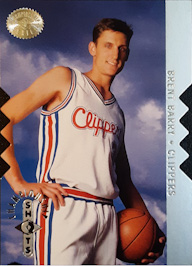
The first year after Ralph Miller's retirement in 1989, his longtime assistant Jim Anderson found himself in basketball heaven. He returned his entire team (except for Eric Knox), and led by the incomparable Gary Payton, tied Arizona for the league title, making still another NCAA tourney appearance. But the euphoria that was OSU basketball could not endure. It would be another quarter of century before they would garner entry into the coveted NCAA tourney (2016), including 13 consecutive losing seasons between 1991-92 and 2007-08. The magical run of players that fueled the Beavers for so many decades had unexplainably ceased. One player who did emerge through the downturn was Brent Barry, son of Hall-of-Famer Rick Barry. The 6-6 guard-forward out of Concord, California (De La Salle High School) earned first team Pac-10 all conference as a senior in 1995, averaging a second best in the league 21.0 points a contest. He was a first round pick of the Los Angeles Clippers (15th overall) in 1995. He inherited his father's instinctive flair for the game, electrifying crowds with an assortment of behind-the-back, no-look, and alley-oop passes. He could also finish above the rim, as evidenced in his winning the 1996 NBA Slam Dunk Contest. He also inherited a keen basketball sense and fully understood the team concept of the game, making him a valuable addition to any squad that tried to de-emphasize the one-on-one isolation style in the NBA. He was a key contributor in 2004-05 and 2006-07 as the San Antonio Spurs won NBA titles, retiring in 2008-09 after a marvelous 14-year career. He moved into television initially before moving on to the Spurs front office as vice president of basketball operations. But with his retirement, the remarkable 62 year of run of Oregon State Beavers continuously in the NBA finally ended. Unlikely as it was, it was a great achievement in the annals of basketball history.